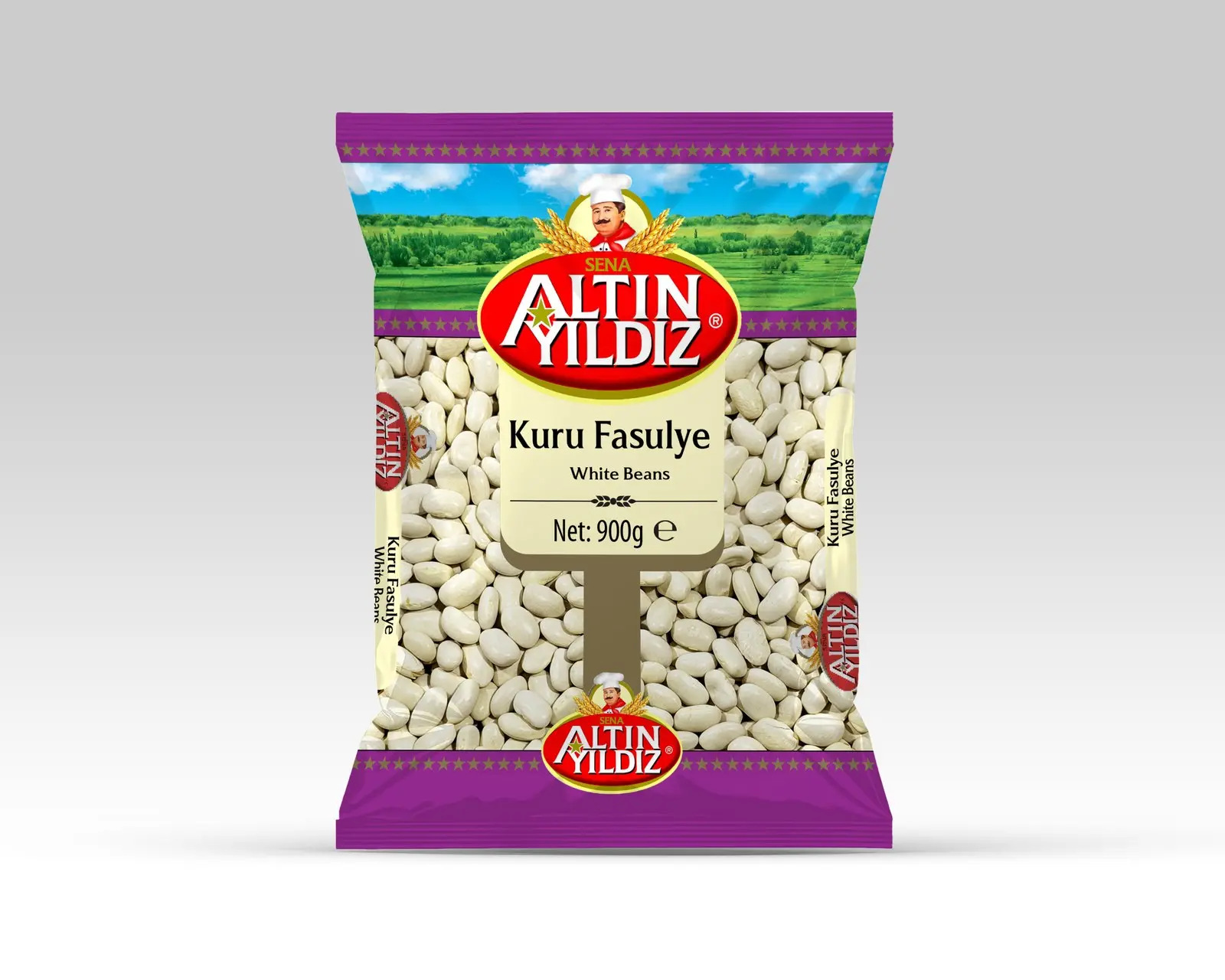
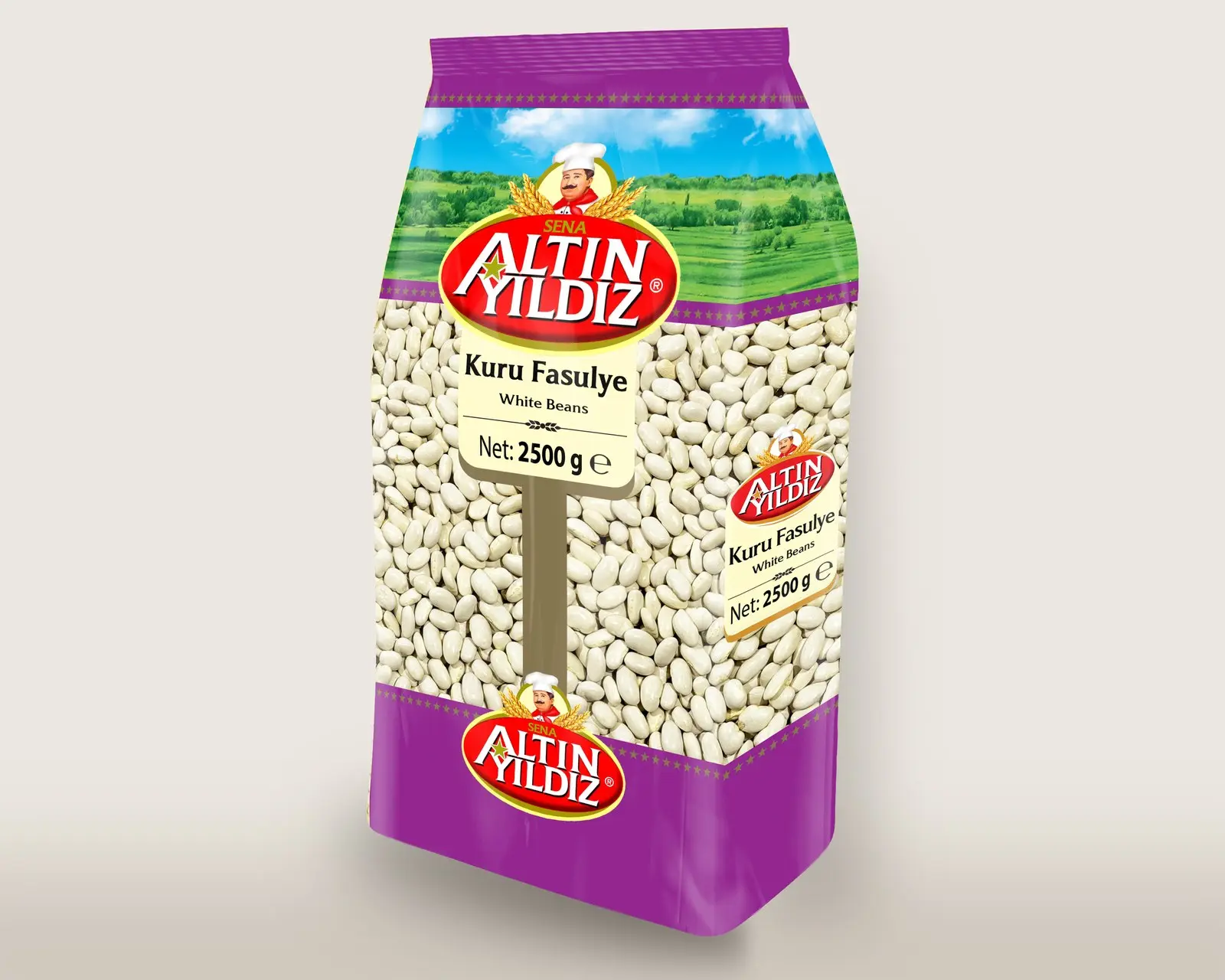
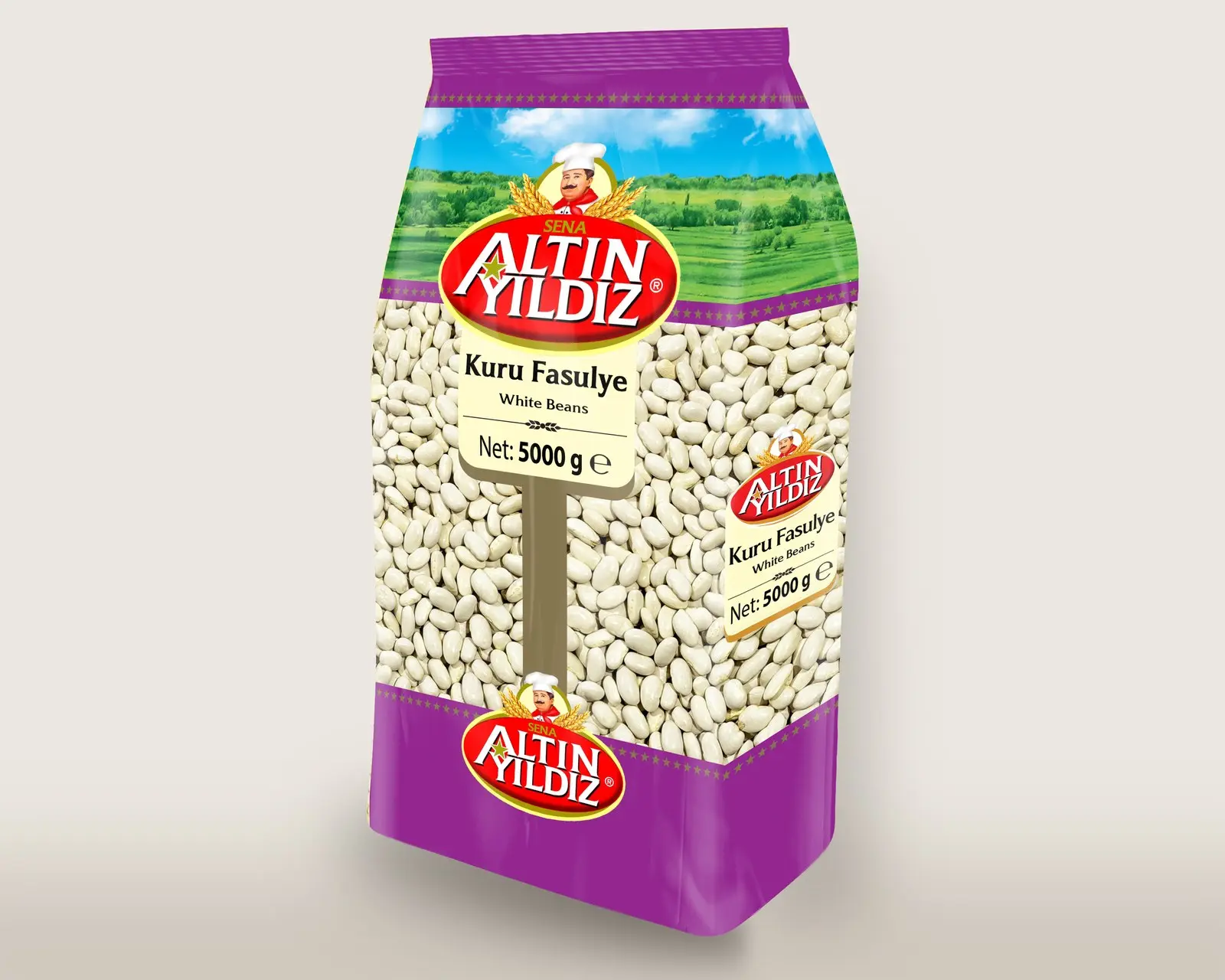
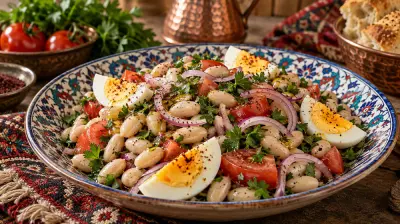
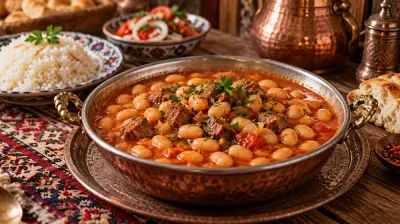
The main ingredient of the best-known dish in Turkish cuisine. With their white, large, even grains they soften when cooked without going floury. Eaten with rice alongside, they raise the nutritional value of the meal markedly.
Nutrition Facts (per 100 g dry beans)
| Nutrient | Amount |
|---|
| Energy | 333 kcal |
| Carbohydrate | 60.3 g |
| Protein | 23.4 g |
| Fat | 0.9 g |
| Fibre | 15.2 g |
| Sugar | 2.1 g |
| Sodium | 16 mg |
| Potassium | 1795 mg |
| Calcium | 240 mg |
| Iron | 10.4 mg |
| Magnesium | 190 mg |
| Phosphorus | 301 mg |
| Zinc | 3.7 mg |
| Folate | 388 µg |
Product Benefits
| Benefit | Description |
|---|
| Packed with fibre | The high fibre content supports digestion and keeps you full for longer. |
| Provides plant protein | About 23 grams of protein per 100 grams. |
| Rich in potassium | Among the highest in potassium of all dry legumes. |
| Completed by rice | Eaten with a grain, it raises the protein value of the meal. |
| Keeps for a long time | Stored dry and cool, it lasts for years without spoiling. |